Saturday, March 31, 2012

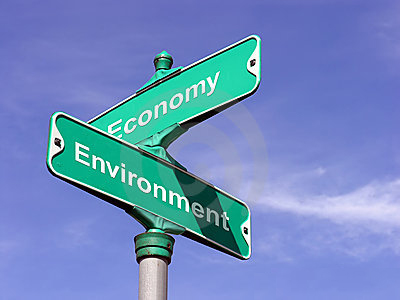
A Heavyweight Main Event: Environmental vs. Sustainability


The question is: "what is the difference between 'environmental communication' and 'sustainability communication'?" At the root level, it is only the semantics that separate them, built by business opportunists and capitalists -- or marketing specialists -- primarily the past two decades to create enough specialization for enterprise. Sounds almost counterintuitive to place capitalist enterprise and holistic ecological concerns in the same breath, but there is simply no other reason for segmenting an ideology into narrow slices -- though one might make an argument it is exactly what religion did to the universality of Love and God. What are we left with after all the slicing and dicing except a lapse in the very outcome we seek? In environmentalism vs. sustainability, did we forget the overall goal?

Ecological design, green building, sustainable development, environmental planning, deep ecology, eco-efficiency, among others are all examples of germinations of relatively new fields of intellectual inquiry relating to the naturalistic approach of ordering our built world. You can spin yourself around all these terms in internet searches on your own. Most academic subjects have now prefixed sub-disciplines using "environmental" or "eco-" in subjects such as planning, policy, law, politics, education, economics, architecture, engineering, and so forth, as though it were a new concept. Join the bandwagon, it's stylish and trendy. Watch as we wage war over natural "faiths" now, further distancing humans from healing the planet. As Richard Louv has pointed out to us in his books, the nature-deficit disorder is symptomatic of many reasons, one of which is the continual removal of ourselves from actually sitting by a tree or feeling the earth.

Though it is no mistake that these new hybrid fields share recognition of the fundamentally ethical nature of environmental problems and social solutions, and the need to question the underlying premises of traditional theories and methods, they have in great part overlooked the significance of designed objects, structures and settlement patterns in the creation of virtually all our environmental problems. Remaining is process-focused in lieu of outcomes-oriented impediments to true sustainability in our world. In short, the role of the built environment (cities, products, landscapes, public spaces) has been overlooked due to marginalizations in favor over preventative design.

The emergence of entire industries built around such "fashions" is practically sickening. Equally so is investing time in analyzing the semantics of words molded by marketing gurus to spin a trend for gain. In lieu of rhetoric, was it even considered the role of nature in man's existence over the course of human's historical existence? In fact, half the world -- our brothers and sisters representing the Eastern model (Asia) could impart evidence of a long-held inner belief that nature and man are inseparable. Unfortunately, particularly in the Western hemisphere, nature has increasingly been relegated to the province of environmentalists while cities and towns have been turned over to developers and planners.

Missing is the notion that pursuing "environmental" or "sustainable" is in fact separated from any action or endeavor we embark. Truth is: we (humans) have separated them over history through distancing ourselves in pursuit of conquest over nature. Suggestion: read a book such as "Earth's Insights" by J. Baird Callicott and glean a multicultural survey of ecological ethics around the globe. Embrace other perspectives. Consider the underlying deep cultural approach such as Vastu Vidya, or Taoist thinking to matters of design.

A faithful thinking might surmise that the cyclical nature of the universe will allow the pendulum to swing back the other direction -- that a synergistic and holistic honoring of nature will respect her in every action human hands touch. Certainly, the intensity of using buzzwords and rallying "green" concepts has either prompted, or responded to, a shift in the collective consciousness toward our view on nature. This can only propagate future evolution in the positive direction, a premise hold dear by this author.

Wednesday, March 14, 2012

Watch the Fracking PR


One of the most controversial and heated debates in the oil and gas energy industry today is hydraulic fracturing, known commonly as “fracking.” The term refers to pumping pressurized water or sand into existing open fissures underground in order to ease the flow of oil to the surface for extraction and use. A search of the term on the internet will lead to a plethora of online sources to peruse and lead you scratching your head to make tails of it.


How fracking works for natural gas extraction. The principle is similar for oil extraction.


Companies involved in and proponents of the technology clearly state that it is a proven and safe method for extracting an important resource. The distance from major population centers an advantage that poses very small threat to human populations. Opponents meanwhile, offer the alternate view that the process poses great risk to contaminating groundwater sources and possible disturbance of natural subsoil conditions that could aid in increased seismic activity. The groundwater contamination issue seems more valid a case considering that fracking includes pumping a variety of chemicals (most beyond the average person’s phonetic skill) that are known carcinogenic or otherwise toxic. Long-term affects to both vegetative and wildlife remain potent. Both sides of the debate are substantiated from credentialed experts – some in the respective fields for whole careers. Do they not know the truth? Where does one turn to find the information necessary for making a sound and informed viewpoint on the topic? You might try paying regular attention to one of many public relations watchdog websites available such as “PR Watch.”


The Center for Media and Democracy publishes, among other sites and publications, the online website entitled “PR Watch.” This site is a portal to a vast amount of news, links, and investigative reported articles that serve to illuminate, educate, and keep one generally informed. The purpose of the site is to expose “corporate spin and government propaganda” and the group qualifies itself by not accepting any funding from for-profit corporations or grants from government. Its writers and researchers compose a group of seemingly qualified individuals representing various topics and issues. The organization formed in 1993 in Madison, Wisconsin, by founder John Stauber who led the group until 2009.


Center of Media and Democracy's "PR Watch" home page.


For Utahns, a state rich in natural subsurface resources such as oil and gas – and for that matter, anyone in a state rich in oil and gas deposits – the topic of fracking is controversial and complex. For a state so wealthy in oil shale and natural gas, it is quite understandable how its governmental leading agencies and industry representatives are steered toward keeping a harmonic balance to assure a long economic health to its citizenry. No one singular energy resource is favored over another; the balanced wholistic approach is the regulatory mantra. Fossil fuel energy is inexpensive in Utah. Economic stability is rock steady as well, and for good reason. The two are inextricably linked. With respect to fracking, to abolish the practice entirely would cripple energy production. Can any of us honestly admit we could live without gasoline in our vehicle? How about living without the power that keeps your furnace or hot water heater working? And to expand your moral circle further, how about the many issues our world continually faces – such as basic water, food, medicine, and housing needs -- on virtually every continent?


Despite the good economic news in Utah and the seemingly improbable end of 100% fulfillment of basic needs globally, the fracking controversy is not lightening any time soon, even in Utah. A recent The Salt Lake Tribune article  illustrated some of the oft-forgotten aspects to the process. This entrenched debate is not unlike the topic of government-controlled lands being accessible for energy developers, a possibility that threatens large areas of great natural beauty reserved for tourism and nature lovers of all sects. No matter how one attempts to slice the issue into manageable segments, there is always a positive aspect to balance the negative, a yin for every yang.


Online image of March 3, 2012 The Salt Lake Tribune article on fracking.


Public relations spin watchdogs and their sites such as PR Watch, also have a yang to their yin. How is it possible to have completely neutral, unbiased, and non-opinioned people behind packaging a resource? My skeptical stance would conclude that groups such as this, despite all the openness in explaining their approach and values, will also carry an agenda that not everyone may agree with; but don’t misconstrue their value. I favor an indiviidual’s choice to procure and assess information, and I promote organizations that clearly define that as their mission through non-biased and informative presenting of facts, as well critical thought.


But just as the expression goes in shopping—in this case information shopping—“buyer beware.”


Tuesday, February 28, 2012

Utah's Air Quality Remains an Issue to Address


Four years ago, a press release from the Environmental Protection Agency regarding Utah's air quality violations was -- and remains -- indicative that the air quality in Utah has been a continuous problem. This well-structured press release was, however, written with some conscious and strategic thinking, and is a surprise given the source of the media release.

The last paragraph presented an option for anyone interested in the topic to submit comments within 30 days:
"In addition, for the first time EPA is opening a 30-day public comment period on the recommended nonattainment designations. All interested parties are encouraged to take advantage of the opportunity to submit comments."

Though it might be a case that the comment request was not really the important part of the release, it does lead one to wonder if there is more behind it's placement at the article's end. Did the EPA wish not to receive comments?

Utah's air quality problem persists to today. It has been acknowledged by staff members from the Utah Department of Environmental Quality (DEQ) and the Office of Energy Development (OED) that air quality is primary issue for the state. It is of little wonder. The online Deseret News published an article recently  focusing on a study that links air pollution to increased health matters, such as strokes, heart disease, and cognitive degeneration.

The article continues to state that the EPA's "safe" levels are still a concern. For Utah legislation this year, H.B. 70 would create an Air Quality Task Force that would be responsible for reviewing efforts to improve air quality in Utah and make recommendations. This Bill does appear to be on route for passing Senate approval.

For Utah, the major cause of air pollution and air-borne particulate matter rests with vehicular traffic. Combine that particulate release with inversion weather days, and it is a recipe for potential health problems. The University of Utah conducted a study on air inversions [also see this link] in 2011. Both DEQ and OED staff acknowledge that the government is very interested in furthering efforts to support compressed natural gas conversions for vehicles, which supposedly burn cleaner than gasoline-powered equivalents.

Would it not be wondrous if the State could provide major incentives for vehicle conversions from gasoline to CNG, or other fuel alternatives?


Monday, February 13, 2012

Is Utah's Stance of Green Energy Becoming More Clear

The percentage and source of energy supply and use for the United States


...Or is it, as the State sits in crosshairs of debate?

2nd installment of a continuing series
(refer to post on January 24, 2012 post)


An article posted on the The New York Times online edition a few days ago titled "Nuclear Power vs. Natural Gas" (http://green.blogs.nytimes.com/2012/02/10/natural-gas-vs-nuclear-power/#more-132211) presented a debate whose focus lands close to "home" for Utahns. The state sits in the crosshairs of a debate while it forges ahead on its energy (and ultimately its economic) strategy for the next ten years.

Last month, Blue Castle Holdings -- the company behind developing a nuclear power plant for the Green River area of northeast Utah -- was granted the water rights for the project by the Utah State Engineer's office. It was another key step towards seeing the project to fruition. The implications for Utah are significant. For a state whose future energy demands are rising and whose water supplies are declining, a nuclear generation plant seems an ill-fit for this intermountain state. Numerous environmental organizations share this concern.

An almost iconic image of a nuclear power plant: its cooling towers

Utah is also known for rich natural gas deposits, a resource state officials endorse as an important bridge in the transition from fossil fuels to renewable sources such as the sun and wind.  As a result, a number of existing coal-fired electric generation plants are being converted to natural gas-fired in order to reduce greenhouse gas emissions into the air. With coal as present primary fuel source in Utah (as is nationally), and natural gas

A natural gas plant

Engineer, and director of Utah State University's Energy Dynamics Laboratory, Jeff Muhs in a conversation with me last month added that the state is really interested in cleaner transportation within the state, namely by pushing more compressed natural gas conversions for vehicles. This, he says, would lower carbon emissions and clean up the air by reducing particulate pollutants from petroleum driven vehicles.

A demonstration of refilling a natural gas vehicle's tank

For Utah, the energy landscape is purposely meant to be a balance of many energy sources -- from existing fossil fuels such as coal and natural gas, to renewable sources such as solar photovoltaic and wind. This balance is endorsed by Utah's Governor Gary Herbert, and by Utah's Office of Energy Development, a department created in 2011 to guide the energy industry wisely as it slowly transitions to cleaner, more sustainable sources. This approach is seemingly in sync with President Obama and his administration as well.

Interesting, and entertaining, with the New York Times article are the reader comments posted after that swing tit for tat blows in efforts to convince an audience. Frankly, it is beyond me why no one mentions the merits of passive solar techniques, as an example, or fails to illuminate the true economics behinds solar photovoltaic (e.g., innovations in the technology are moving so fast that return on investment is presently near impossible).

Utah Governor Gary Herbert holding a copy of the state's 10-year Strategic Plan for Energy Development

As Governor Herbert's "sold-out" Energy Summit (http://event.registerat.com/oed12/) is set to take place on Wednesday, February 15, with speakers and discussion panelists representing all energy industries, an entertaining and interesting intellectual melee may be witnessed by about 1000 registrants right here in Utah. Governor Herbert has made it clear the importance of energy for the State's health and economy (http://blog.governor.utah.gov/2011/11/gearing-up-energy-summit/).

Salt Lake City and Utah in recent years have received a lot of attention for how it manages and balances its economic growth [see below] -- energy among those factors. I am hopeful a smart energy development model for the nation will emerge from here.


Some links:
http://www.kiplinger.com/magazine/archives/best-cities-2010-salt-lake-city-utah.html
http://www.wannanetwork.com/2010/10/18/forbes-utah-best-place-for-business/
http://business.utah.gov/whyutah/accolades/


Sunday, February 5, 2012

There is Just Something About Polynesian Architecture...


...that inspires me. Pictured above is an idea for home, albeit perhaps one sited in locales many of us could not afford (such as in Hawaii, or in the maritime islands of Polynesia). That is not important at this moment. Despite any challenge, the attraction I have for this architecture is one that weds a number of elements that speak toward a philosophy called Organic Architecture. Something also very appealing is that the timeless "style" could fit in any number of eras, lifestyles, and specific locations. The particulars only need change to match the precise climate, precise local materials available, or precise program elements requested of the homeowner.

Some of my own architectural iconic heroes -- Frank Lloyd Wright, E. Fay Jones, and William Bernoudy -- could have easily inspired this design. The visible features include a hip-roofed (note the Asian-influenced corners at the eave line), broad overhangs, and an apparent stepping down on a site (presumably with a vista over and behind the photographer's right shoulder). In lieu of a singular vertical-oriented structure, this design provides a complex of functions spread horizontally we can only surmise, all situated around an outdoor area. Likely a guest house, or a cabana with outdoor living areas, are just some of the functions. The roof designs are hipped to provide gable faces on all four sides. This, combined with the overhangs, gives the structures a sense of repose.


In another Balinese design (pictured above), we see an important principle in Organic Architecture: the openness to the outdoors. Imagine dining here. Glass in lieu of solid wall and exterior materials that continue to the interior (note the columns of stone on both sides of the glass) are two detail methods that work for this idea. Below is an idea that includes a two-story main structure, but note the garden with its variety of elements, both natural and man-made. Verdant foliage, potted plants, an irregularly-shaped water feature or pool -- all a part of the outdoor space that seems to integrate with its buildings.


Expressing the space by use of material and structure is another principle.


Making the home a sacred place is an important idea we seldom forget for our own homes. I have yet to meet a builder who fully understands this idea. What does home mean to you? Hopefully it is more than just a place to park your stuff.   In this case the bedroom is given special attention. In Bali, the link to the outdoors is essential -- also, some protection from unwanted insects. The screened chamber may be closed while sleeping. The ceiling seems to flow past the entry area into the bedroom (note the glazing and/or screening at the ceiling line), much to the effect of extending an interior material to the outside, or an exterior stone into the interior.

The beauty of the Balinese architecture is one that allows for flexible and individualized arrangements and forms, but soulfully speaks to the use of natural materials and the celebration of nature and environment. Sustainability is more than sticks and stones or low carbon footprints, it also is spirit and harmony with our own hearts and mind. If those are not satisfied, how could anyone anticipate living happily in their habitat?